
2026 Operational Referendum

2026 Operational Referendum
Frequently Asked Questions
-
A recent family survey indicated that 93% of respondents agree or strongly agree that ETCSD is right to focus on the 6 Cs for learning: creativity, critical thinking, collaboration, communication, content, and curiosity. In addition, 91% agree or strongly agree that ETCSD should always provide resources and proper staffing toward attaining district goals. And, 94% rated the district’s communication as great, good, or fair—with 80% stating great or good.
Since the passage of the 2023 operational referendum and the stability it brought to district budgeting and staffing, ETCSD has seen clear academic momentum. The district earned an overall “Exceeds Expectations” rating on the 2024–25 State Report Card, with scores increasing from 2022–23 to 2024-25. Prairie View Elementary and East Troy High School continue to rate as “Exceeds Expectations,” while East Troy Middle School demonstrated notable year-over-year improvement, earning a “Meets Expectations” rating and exceeding state averages in both language arts and mathematics achievement—evidence that focused efforts across the district are producing results.
At the same time, staff turnover has decreased and staff satisfaction has increased. We are proud of the measurable progress made in stabilizing our workforce following the successful 2023 referendum. Our data shows a direct correlation between community support and teacher retention. In 2022, following consecutive proposed referendums that fell short of being approved, 57% of staff reported they were considering seeking employment in other districts. By 2024, that number dropped significantly, to 31%.
We are particularly proud of the shift in feedback from staff leaving our district. While comments in 2022 were dominated by "referendum anxiety" and concerns over organizational stability, by 2024, those concerns had largely disappeared. More recent feedback, collected in 2025, highlights manageable workloads and staff having the support and resources necessary to be effective in their roles.
State report card presentation at the November 17, 2025 board meeting.
Middle School MAP update at the January 19, 2026 board meeting.
-
In April 2023, our community approved a three-year, non-recurring $3 million operational referendum for the East Troy Community School District. This funding has been critical to ensuring an excellent educational experience for our students. However, this referendum is set to expire at the end of the 2025-26 school year.
Our district does not have enough predictable and stable funding to maintain quality educational opportunities for students, attract and retain quality staff in an ever competitive labor market, and adequately maintain its school facilities within the state-established revenue limits. This makes a renewal of the operational referendum critically important.
-
Funding:
- Even with the additional $3 million per year from the April 2023 operational referendum, the district still needed to address a budget deficit of approximately $461,00 in the 2025-26 school year. While this shortfall was anticipated, the district needed to draw on its fund balance to maintain proper staffing. The current operational referendum expires at the end of the 2025-26 school year.
- Current budget estimates show deficits of $4.3 million in 2026-27, $4.8 million in 2027-28, and $5.8 million in 2028-29 without any additional operational funding and if the district were to maintain all current staffing, programming, and services for each of those years without undertaking any budget-balancing efforts. On January 19, 2026, the Board of Education proposed and approved a referendum resolution to be presented to voters in the amount of $4 million each year, for three consecutive years. If voters approve this measure, the district would still need to move ahead with budget-balancing efforts of $1.8 million over three years, based on our current projections.
- There has been a continued lack of stable and predictable funding at the state level, as per-pupil revenue limit increases have fallen significantly behind inflationary increases. If the revenue limit had kept pace with inflation since 2009, the district would have had $5.4 million in additional funding for the 2025-26 school year.
- The district is experiencing increasing costs for things like utilities, transportation, competitive labor market, and insurance.
- Pressures have been compounded by continued underfunding of special education. Though the special education reimbursement rate may increase to 42% (from 35%), it still would not cover the costs of special education. Thus, we would need to continue to divert funds that otherwise would have gone to general instruction. It is important to remember that special education aid helps district budgets, but does not count toward increasing the revenue limit. Lastly, eligible special education costs being reimbursed by the state dropped to as low as 25% in 2020, which was down from 44% in 1995.
- Student enrollment is declining locally, statewide, and nationally. Across Wisconsin, 74% of school districts have fewer students now than they did 15 years ago. This is an issue, as the amount of money we receive is based on the number of students we serve. As these declines are spread across grade levels and there are many fixed costs, they do not necessarily result in staffing and operational reductions. The needs for student learning, programming, resources, and staffing support remain for our students and staff.
- The Board of Education recognizes the upcoming expiration of the current operational referendum and the need to replace it in order to maintain essential programs and staffing through continued district support.
Staffing:
- By prioritizing a stable financial path, we have moved away from the high staff turnover levels we saw in the 2022-23 school year. Following a peak of approximately 75 staff departures in 2022-23 (a figure representing our teachers, supervisors, administrators, administrative assistants, paraprofessionals, special education paraprofessionals, custodians, transportation, and food service), turnover has decreased by approximately 40%, reaching a low of 44 departures for the 2025-26 school year. (Note: These figures focus on permanent staff and do not include the additional turnover of seasonal or supplemental roles such as coaches, substitutes, or athletic event workers).
- This means 30 more familiar faces stayed in our district as compared to 2023. Reducing this turnover is vital for our students and staff and staff, whose success is built on consistency and relationships. When a staff member leaves, it is more than just a vacancy—it is a disruption to our district’s strategic priorities. High turnover shatters this sense of stability, thus affecting our learning gains, staff morale, and our ability to attract families and staff to our district.
- In addition, retaining our talented staff also allows us to avoid the significant costs and disruptions associated with constant recruitment. In today’s difficult labor market, in which we must compete for a limited pool of candidates against both other school districts and the private sector, every departure triggers a costly and time-consuming cycle of hiring. Constant turnover often leads to difficult wage negotiations that can threaten internal equity.
-
A majority of a school district’s revenue is controlled by a revenue limit, determined by the state’s school funding formula. The purpose of the revenue limit is to cap the amount of money a district generates from the two largest sources of school funding: state equalization aid and property taxes. A district’s total revenue may not exceed the limit set by the state formula, unless an operational referendum is approved by the voters.
-
The district is heavily reliant on the state funding system, which has not kept pace with inflation and the needs of our students. In fact, ETCSD’s revenue limit has always been lower than most other districts. This is because when the state created revenue limits in 1993, low-spending, frugal districts like ours were locked into a very low limit. In fact, only 15% of the schools in Wisconsin had a lower revenue limit than ETCSD in 1993.
While districts were permitted a modest increase in revenue limit for the 2025-2027 state biennial budget, that increase was below the rate of inflation for the 17th consecutive year and was not accompanied by any increase in state general school aid. Historically, when the state legislature has allowed revenue limits to grow, it has paired that authority with corresponding increases in state aid to limit the impact on local taxpayers. The 2025-2027 budget broke from that long-standing practice.
As a result, costs were effectively shifted away from the state budget and onto local property taxpayers, despite no change in local spending decisions.
-
There are several areas of State funding that are referred to regarding school finance:
Revenue Limit
A revenue limit places a limit on how much a district can receive through a combination of state general (equalization) aid and property taxes. A complex formula determines the overall revenue limit. The State determines how much of a yearly revenue increase districts will receive with each State Biennial Budget. The increase since 2023-24 has been $325 per member each year. Although the district is extremely grateful for the $325 increase, the funding is still below the rate of inflation. As shown on the Inflation Indexing Chart, revenue limit increases have been below inflation for the past 17 years. Specifically, for ETSCD, the Maximum Revenue / Member for 2024-25 was $11,530 (Line 5 of the Revenue Limit). A $325 increase for 2025-26 or a 2.8% increase, was below the inflation rate of 2.95%. Prior year increases were much further below inflation and cumulatively, are the reason why most districts seek additional support through operating referenda. If the revenue limit increases had paced inflation for the past 17 years, ETCSD would have $5.4 million in revenue limit authority based on our current three-year average of student FTE membership, which does account for the decline in enrollment. The revenue limit uses a three-year average membership of FTEs for funding. The state understands that a decline in membership isn’t linear to a decline in costs; hence this is why a three-year average of FTEs is used. As enrollment declines are spread across grade levels and there are many fixed costs, they do not necessarily result in staffing and operational reductions. The needs for student learning, programming, resources, and staffing support
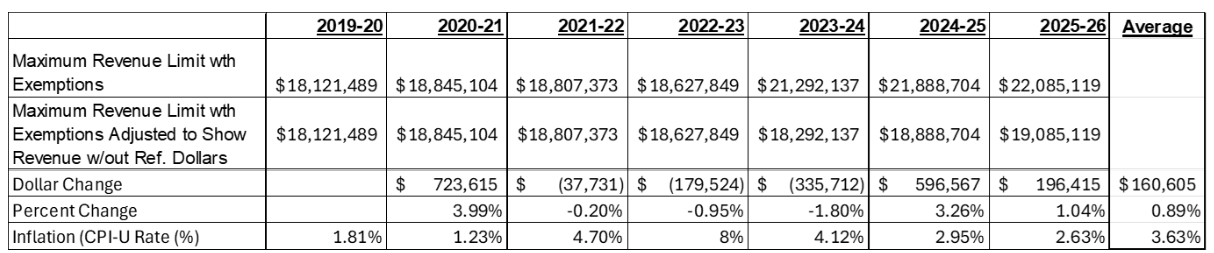
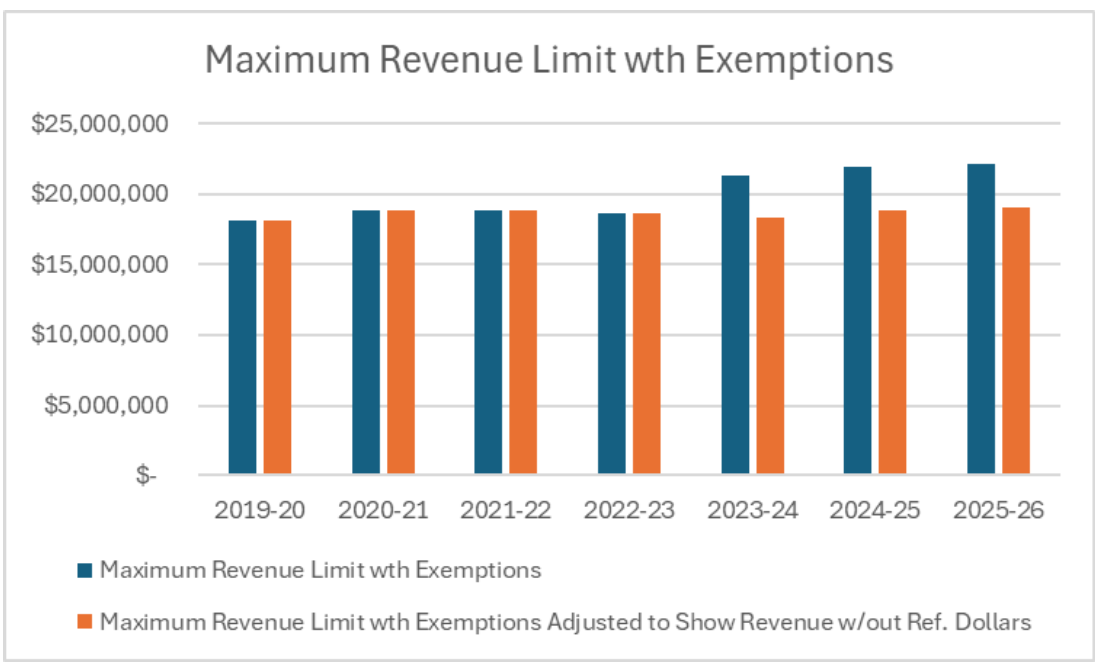
remain.The chart and graph below show the district’s Maximum Revenue Limit with exemptions and then the adjusted amounts without referendum dollars for 2023 - 2026. The adjusted amounts show an average increase of less than a 1% annually while the inflation average was 3.63%. Since the revenue limit is a formula that limits revenues and incorporates many different aspects of school finance, it does not correspond to a specific budget line item.
State General (Equalization) Aid
State general aid, also known as equalization aid, is financial assistance provided to public schools and may be used for any Fund 10 expenditure. Since the revenue limit is a combination of state general aid and property taxes, less state general aid means the district will be more reliant on property taxes as the main source of income.An equalization aid formula has the purpose of reducing the reliance upon the local property tax as the sole source of revenue and to guarantee that a basic educational opportunity is available to all pupils regardless of the local fiscal capacity. Therefore, districts with higher property values per member receive less state general aid. Since East Troy has higher property values than many other school districts, East Troy is more reliant on property taxes. Historically, when the state legislature has allowed revenue limits to grow, it has paired that authority with corresponding increases in state general aid to limit the impact on local taxpayers. The 2025-2027 budget broke from that long-standing practice. Therefore, with high property values and no increases to state general aid, ETCSD will be more dependent on property taxes for the 2025-2027 budgets.
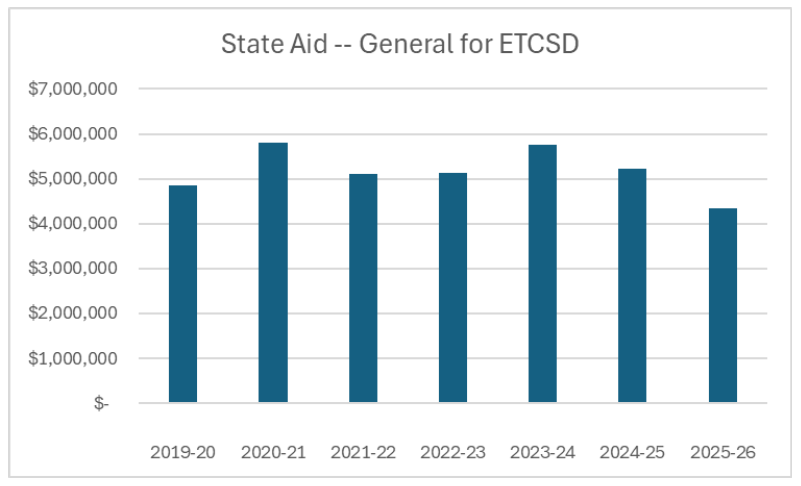
State general aid is a specific line item in the budget. The Annual Meeting Packet includes a detailed budget that lists “620 State Aid - General”. The chart and graph below show the changes in state general aid over the past six years. The district is receiving 11% less state general aid in 2025-2026 compared to 2019-20 and 17% less than the prior year.

State Categorical Aid
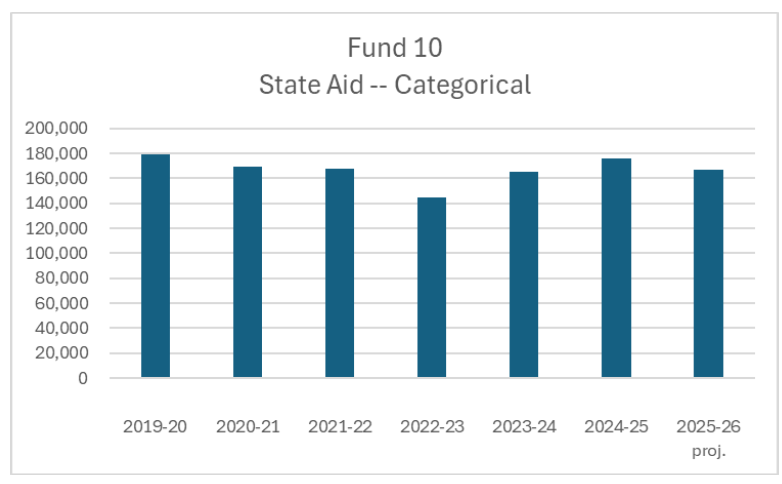
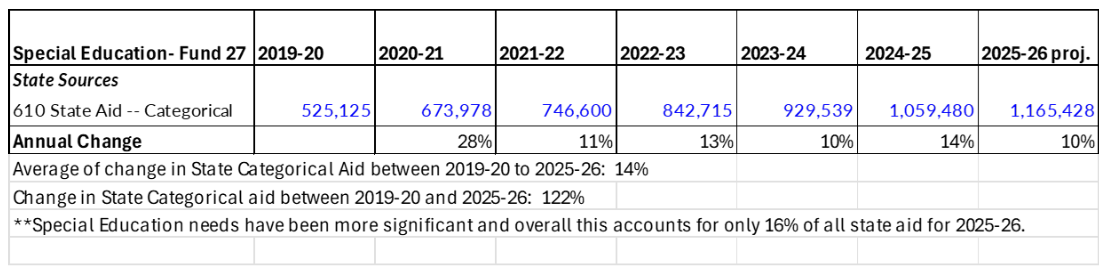
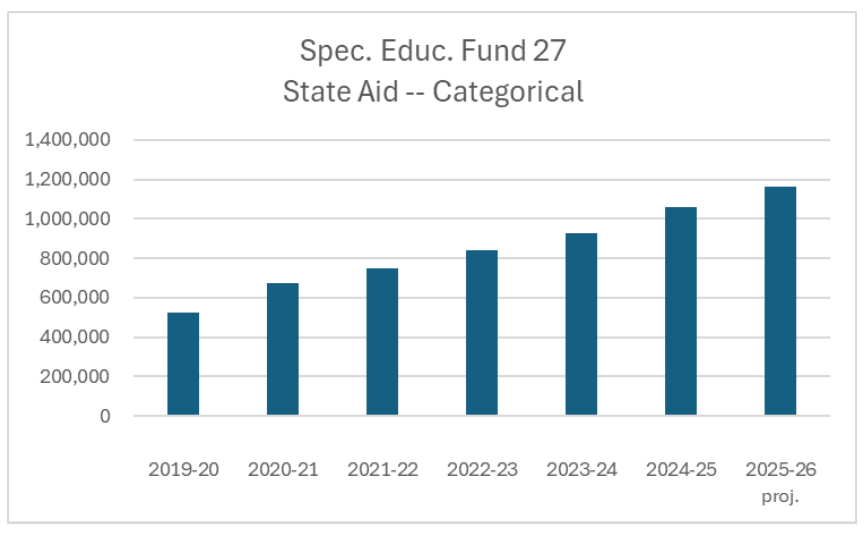
State categorical aid is aid that is intended to partially reimburse a specific category or program. Some examples of categorical aid are per-pupil aid, transportation aid, and special education aid. These sources of revenue are outside of the revenue limit. Categorical aid categories have specific line items in the budget. The Annual Meeting Packet includes a detailed budget that lists the total of categorical aid as “610 State Aid - Categorical” for both the General Education, Fund 10 and Special Education, Fund 27. The average annual change for General Fund categorical aid has been -5% over the past six years.
Special education aid has increased due a combination of increased student needs and modest increases in the state reimbursement. However, Special education aid is 16% or less of all categorical aid and is specific to programs and staff who serve students with disabilities.
All State Aid Combined
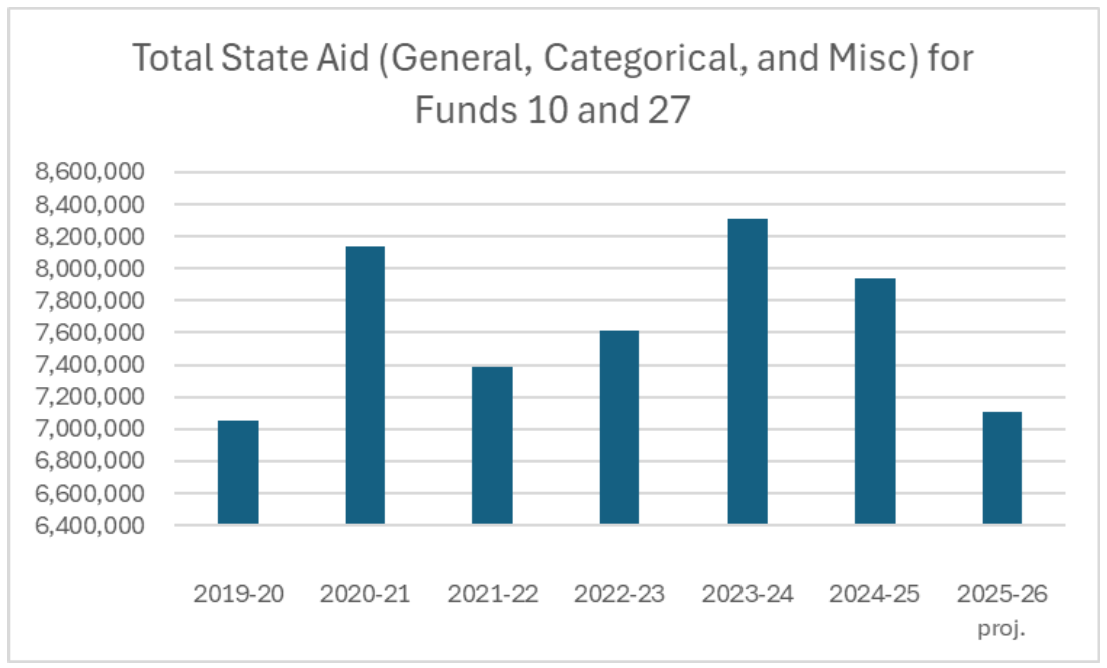
State aid subtotals are listed in the detailed budget publications provided in the Annual Meeting Packet. State aid is also a significant focus of outside financial auditors who conduct the state-required, annual financial audit each fiscal year. The totals of all state aid (general, categorical, and miscellaneous) for both the General Fund 10 and Special Education Fund 27 are listed in the chart and graph below. The average state aid change for the past six fiscal years is 1% while the average of inflation is 3.65%. Therefore, many years of state aid increases being below inflation cumulatively add up and place the district in a position to rely on referendum support to continuously
deliver a quality education to students.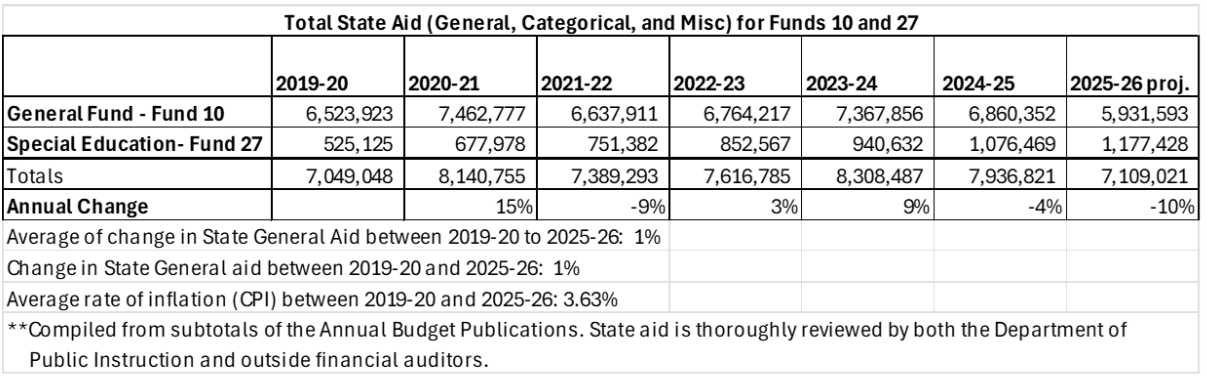
-
Cost Saving Measures
In the last 16 years (as of the 2022-23 school year), prior to the current $3 million operational referendum that is set to expire, the district had undertaken more than $10 million in balance-budgeting efforts. This resulted in:
- Changes and reductions in all benefits
- Moderate wage increases
- Making energy efficiency gains
- Restructuring positions and eliminating positions
- Applying for grants and gifts
- Refinancing debt
- Elimination of programs and services
- Deferred maintenance
We continue to take action in these areas to help control expenditures while also investing in our schools and students.
Long-Term Planning
- Continue to put the District Goals and District Strategic Priorities at the forefront.
- Continue to have a balanced budget.
- Continue to invest accordingly in staffing and resources toward maintaining our momentum pertaining to student learning experiences.
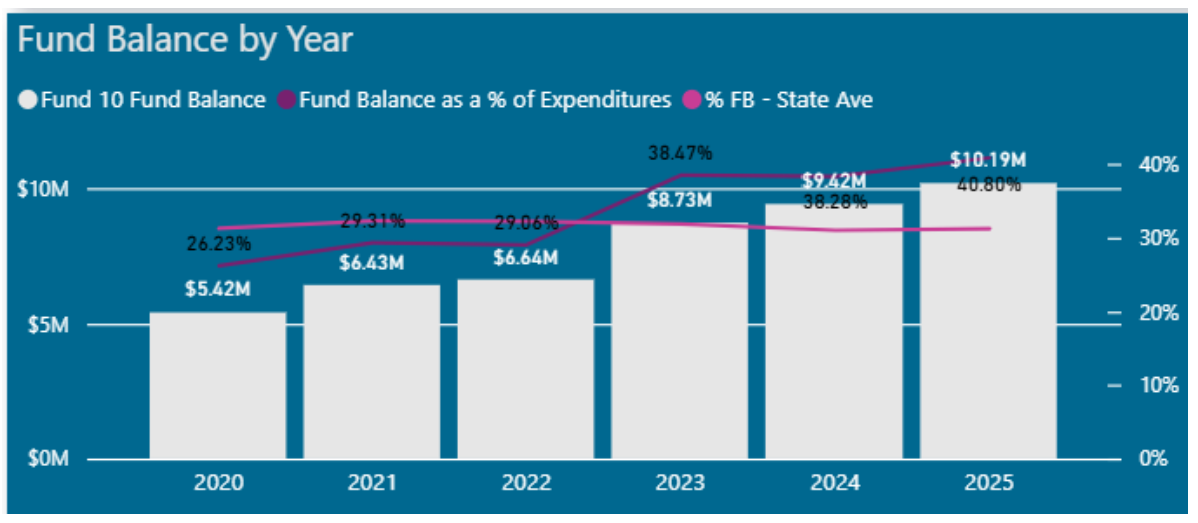
- Due to long-term fiscal responsibility, the district has achieved a 36% fund balance, which has enabled the district to prepare for emergency expenses and assisted with the 2025-26 structural deficit for one year within the last year of the operational referendum.
- Short-term borrowing has been eliminated for the past two years due to having a healthy fund balance, thus saving the district substantial interest.
- The district has a Moody’s Rating of Aa2. This reflects our strong fund balance and the 2025 budget being balanced.
- Deposits of $100,000 in 2023-24 and $250,000 in 2025-26 have been made into the Fund 46, Capital Improvement Fund for future emergency maintenance expenses.
- We continue to utilize the current school year operating budget to address infrastructure efficiencies, leveraging positive budget variance to complete additional high-priority capital projects not included in the 2024 capital referendum.
- These efforts include completing the first two phases of a six-phase LED lighting modernization at the high school (including the kitchen), HVAC updates, and repairs to main electrical services at both the middle school and high school.
- At the middle school, three 22-year-old water heaters were replaced with high-efficiency models, along with a comprehensive overhaul of the water main and bypass valve system to ensure leak-free maintenance moving forward.
- Upgrades to the Bret Miller Gymnasium—including full bleacher replacement to better meet ADA requirements, wall painting, new acoustic panels, floor resurfacing, and an updated paint scheme—were all completed within existing operating funds.
- Through targeted administrative controls and the implementation of standard operating procedures, ETCSD significantly reduced electrical consumption at the high school, achieving a weather-normalized energy use of 61.5 kBtu per square foot. This placed the building in the 86th percentile nationally (top 15% among comparable facilities). These proven strategies will guide long-term energy savings efforts across other district buildings.
- After the passing of the November 2024 capital referendum that focused on safety and security, critical maintenance projects, middle school science labs, and transportation, the district should not need to consider another capital referendum for at least 10-20 years. This would be in alignment with the expiration of current debt from 2015.
- Little Prairie and East Troy High School are both performing very well from an energy efficiency standpoint based on ENERGY STAR benchmarking. Little Prairie has an ENERGY STAR Score of 81 and a low weather-normalized EUI of 53.9 kBtu/ft², indicating efficient energy use compared to similar schools nationwide.
- The high school is performing even better, with an ENERGY STAR Score of 86 and a stable weather-normalized EUI of approximately 60.5 kBtu/ft², placing it in the top tier of comparable school buildings. These results confirm that our facilities are operating efficiently and that our energy management practices are producing strong, measurable outcomes.
Controlled levy increases
- In the nine years leading up to the 2023 approved operational referendum, the East Troy Community School District’s tax levy increased by an average of 1.03% each year.
- The 2015 Capital Referendum for the building of Little Prairie Primary School, along with additions and renovations at East Troy High School, had a tax impact of $1.00 per $100,000 of property value.
- The 2024 Capital Referendum was originally estimated to have a tax impact over current levels of $21 per $100,000 of property value, but came in lower—at $18 per $100,000 of property value.
- The 2023 $3 million, three-year operational referendum was originally estimated to have a $140 per $100,000 of property value impact, but was $116 in 2023-24, $111 in 2024-25 and $104 for 2025-26 (again, this operational referendum will be expiring at the end of this school year).
- ETCSD’s tax mill rate has been at or below the state average for the last several years.
-
- Capital Referendum(s) 2015: Voters approved a $22.5 million referendum and a $2.2 million referendum for the purpose of building a new elementary school and other various site improvements at other buildings. The tax impact of this referendum was $1.00 per $100,000 property value. This debt is scheduled to expire in 2036.
- Capital Referendum 2024: Voters approved a $19.4 million referendum in November 2024, allowing ETCSD to move forward with key facility, safety, and maintenance upgrades. The 2024 referendum is estimated to have a tax impact of $18 per $100,000 of property value for the 2025-26 fiscal year. This debt is scheduled to expire in 2045.
- Operational Referendum 2023: East Troy voters approved a $3 million per year for three years operational referendum, supporting staff and programs while providing stable funding through 2026. This referendum allowed the district to increase the revenue limit for school years 2023-24, 2024-25, and 2025-26. This referendum was expected to have a $140 per $100,000 property value tax impact. The current tax impact is $36 less, at $104 per $100,000 of property value. This operational referendum expires at the end of the 2025-26 school year.
-
The Board of Education carefully considers student learning outcomes, staffing challenges, school operations, funding needs, and community feedback as part of its decision-making process. A survey was distributed to the community to gain feedback on operations and funding before deciding on a referendum question for the April 2026 election.
The survey was distributed in early December, with a December 15 deadline for survey participation. The survey results were reviewed at a Special Board Meeting on Wednesday, January 7, 2026. After much discussion, the Board of Education took action on January 19 to officially approve a referendum question that will appear on the ballot Tuesday, April 7, 2026.
-
Shall the East Troy Community School District, Walworth and Waukesha Counties, Wisconsin be authorized to exceed the revenue limit specified in Section 121.91, Wisconsin Statutes, by $4,000,000 per year for three years, beginning with the 2026-2027 school year and ending with the 2028-2029 school year, for non-recurring purposes consisting of operational expenses for programs and staffing?
-
If approved by voters, the revenue limit would increase by the taxpayer-approved amount, beginning with the 2026-27 school year and ending with the 2028-29 school year. The $4 million per year would replace the expiring 2023 operational referendum and would be for non-recurring purposes (meaning this funding expires after the 2028-29 school year), consisting of operational expenses for programs and staffing.
-
Budget projections become less accurate when estimates extend out several years, and we remain committed to our conservative projections. There could be changes in enrollment, state funding, and/or legislation, as well as the unknown next state biennial budget for 2027-2029. A three-year operational referendum allows the district to reevaluate the budget estimates again in three years as more information becomes available.
A three-year referendum also allows us to seek appropriate levels of funding for programs and staffing, while ensuring we do not ask taxpayers for too much or too little of an investment to support district operations.
-
Unfortunately, without a major overhaul of the funding formula for Wisconsin public schools and/or significant enrollment increases, ETCSD will most likely need to depend on operational referendums for funding to maintain programs and staffing. These budget challenges are not unique to East Troy. In fact, 87% of Wisconsin school districts have asked their voters for additional funding through operational referendums.
-
If approved by a majority of voters, the $4 million per year operational referendum (for three years) would have an estimated tax impact over the current level by $42 per $100,000 of assessed property value (or $3.50 per month).
The current mill rate is at $7.07 (or $707 per $100,000 of assessed property value). With an approved referendum, the estimated mill rate would be $7.49 (or $749 per $100,000 of assessed property value). Thus, there would be an estimated tax impact over the current level of $42 per $100,000 of assessed property value (or $3.50 per month).
-
There are many factors that go into overall taxes, but the current district mill rate is $7.07. Without any replacement operational referendum, the estimated mill rate would be $6.15.
Instead of the current $707 per $100,000 of assessed property value, the mill rate would be an estimated $615 per $100,000 of assessed property value. Thus, there would be a decrease of $92 per $100,000 of assessed property value (or $7.66 per month less).
-
The District has a history of conservatively estimating the tax impact of both capital and operational referendums. For example, the 2015 capital referendum was estimated to result in a tax impact of $15 per $100,000 of assessed property value, but the final impact was just $1 per $100,000. Similarly, the 2023 operational referendum was estimated at $140 per $100,000, while the final tax impact was $104 per $100,000. Most recently, the 2024 capital referendum was projected at $24 per $100,000, with the final impact coming in lower at $18 per $100,000.
-
Yes, the district is aware that the Village of East Troy was reassessed and residents' tax bills increased compared to the prior year. Additionally, municipalities, counties, and technical colleges also face funding challenges and increasing costs due to inflation.
-
Current budget estimates show deficits of $4.3 million in 2026-27, $4.8 million in 2027-28 and $5.8 million in 2028-29 without any additional operational funding and if the district were to maintain all current staffing, programming, and services for each of those years without undertaking any budgetary-balancing efforts. That said, if the $4 million per year operational referendum were to be approved by a majority of voters, the district would still need to engage in budget-balancing efforts of $1.8 million over three years, based on our current projections.
We would continue to closely manage health insurance renewal rates, implement a salary freeze for administrators (and possibly supervisors) during the 2026–27 school year, and carefully evaluate attrition and resignations before deciding whether positions should be replaced—while always considering the impact on student learning, staffing levels, and overall district operations. Furthermore, reduction of additional full-time equivalent staff members (possibly 10-15) over the course of three years would need to be considered to support balancing the budget. There would also be the possible use of fund balance to help offset the deficit in year three.
-
If the proposed referendum is not approved, the district’s need for adequate funding to sustain a quality educational learning experience that supports a great place to learn and a great place to work will remain. The district would need to address the projected $4.3 million structural deficit in the 2026-27 school year, largely due to the lack of financial support that the referendum has provided over the past three years.
To balance the budget if the referendum does not pass, the district would need to consider taking the following actions:
- Determine an operational referendum amount the community will support and clearly communicate the potential impacts on student learning and staffing based on the new referendum amount.
- Eliminate or reduce full-time equivalency (FTE) staff, which could impact 25 staff members in the 2026-2027 school year and possibly more thereafter.
- Take cost saving measures in resources through the reduction of budgets.
- Make changes to health insurance benefits to employees and other benefits.
- Implementing district-wide salary freezes.
- Reduce curricular offerings, elective programming in middle school and high school, and district-wide summer school.
- Altering transportation routes.
- Reduce curricular support and professional development for staff.
- Begin depleting the Fund Balance and reprioritize funds from the Fund 46 (emergency capital projects).
To address this large budget deficit, the budget implications will greatly impact the district from a student learning experience and from a staffing experience. We can anticipate it will negatively impact the district in the following ways:
- Affect our enrollment, thus affecting our revenue limit and adding to greater structural deficits.
- Difficulty with staffing in a highly competitive labor market (staff turnover).
- Inability to implement best-practice instructional strategies (personalized learning).
- Increased class sizes across district grade levels.
- Reduced capacity to meet individual student needs within classrooms.
- Reduced capacity to meet family needs and support services.
- Reduced capacity to form and meet community partnerships.
- Reduced capacity to provide intervention and support services to students, families, and staff.
- Reduced programming and frequency of elective offerings.
- Reduced capacity to sustain momentum of strategic priorities.
- Reduced capacity to maintain and increase “points of pride and achievements.”
- More shared staffing positions and part-time positions (hard to fill).
- Inability to maintain a healthy fund balance.
- Difficulty maintaining a healthy morale among family, students, and staff.
-
It is a fair question to ask: if there are fewer students in the seats, why aren’t there fewer staff members? To understand our staffing levels, it is important to first recognize that 68% of our district costs are personnel-related, and these costs do not shrink in direct proportion to enrollment. School staffing is less like a retail business that scales with foot traffic and more like a specialized service infrastructure; losing students across fourteen different grade levels doesn't necessarily reduce the need for a classroom teacher, a bus driver, a specialized therapist, and/or a supervisor or administrator. Our commitment remains the same, to provide a high-quality education regardless of fluctuations in the student census. Thus, a great place to learn and a great place to work.
Below, we have outlined some specific factors—including programming, legal mandates, and the evolving needs of our children—that explain why our current staffing is essential for student success:
Key Drivers of Staffing Levels
The Proportionality Gap: Enrollment decline is rarely concentrated in one place; it is spread across 14 grade levels (4K–12). Losing 50 students across the entire District does not necessarily align to a classroom teacher reduction as this could be 3 to 4 students per grade level. Support services and programming opportunities are still required for the remaining students, and existing school and district responsibilities and requirements must be maintained.
Evolution of Support Services: Education and the needs of today's students have changed significantly over the past 20 years. We have seen profound shifts, including a rise in social-emotional and mental health challenges, new approaches to instructional practices, greater emphasis on intensive early intervention and support, increased importance of ongoing professional development, smaller class sizes in early elementary grades, and an expansion of programming options.
Recognizing that a "one-size-fits-all" approach is no longer effective, we have moved away from outdated staffing ratios toward a model that provides the specific human resources necessary for every student’s success.
Mandated Standards & Legal Requirements: Whether we serve 1,300 students or 1,600, we are legally required to meet the rigorous new literacy requirements of Act 20, state assessments, fulfill services outlined in IEPs, respond accordingly to Title IX regulations and guidelines, investigate student and staff concerns, embed quality evaluative practices, manage educational licenses, and manage "Transfer of Service" needs (such as 1:1 aides for incoming students) just to name a few. Additionally, state-mandated administrative requirements for safety, along with required reports remain non-negotiable, regardless of student count.
Special Education Paraprofessionals: We intentionally increased special education paraprofessional hours during the 2024-2025 school year to create consistency. Moving 18 positions to 91% full-time status ensures our most vulnerable students experience fewer transitions and have access to familiar faces every day, which improves school culture and ensures IEP goals are met with stability.
Full-Time Substitutes: The number of full-time substitute positions has fluctuated based on operational needs. In the 2020-2021 school year, four full-time substitutes were implemented to provide greater consistency and stability within the buildings, a response to the guidelines required of staff during the COVID-19 pandemic. This was reduced to two full-time substitute positions for the 2024-2025 school year. However, we recognized the essential need for these positions to ensure stability in classrooms and reliable support for staff, and therefore
returned to four full-time substitute positions for the 2025-2026 school year.Programming: Our district is proud to offer a wide range of programming designed to foster student growth and experiences from early childhood to graduation. Specialized programs allow students to experience real-world, hands-on learning. By providing students with opportunities to build skills in a variety of disciplines and possible career paths, we support student development as learners and future leaders. Offering high-quality specialized programming means employing specialized staff members, from art teachers, to music teachers, to technology education teachers, our staff are highly qualified to teach within each program. Some highlights include:
- Academic Intervention: While fulfilling Act 20 literacy requirements at the elementary level, our district provides a continuum of reading and math interventions that supports student growth from their first steps in school through graduation.
- Advanced Learning Opportunities: As a member of the Southern Lakes Advanced Learner Network, we enrich the curriculum through a variety of extensions from competitive math meets and science immersion to leadership workshops and art and writing competitions like the Southern Lakes Anthology.
- Agriculture: Exploratory agriculture instruction through college-level learning, the East Troy Ag department is a leader. Our students and staff have served at the state and national level in FFA leadership, founded on high-quality classroom instruction.
- Business: Through keyboarding instruction in elementary school, introductory classes in middle school, and an exemplary high school program, East Troy students are able to earn college credit, industry credentials, and enter their careers and or college even before graduation.
- Music: From foundational music in kindergarten to the debut of band in fifth grade, our music program fosters a proud K-12 journey that culminates in award-winning high school ensembles.
- STEAM: Starting in 4K, connecting to middle school and high school Smart Lab and Fab Lab programming and technology education and engineering, students use cutting edge tools to solve real-world problems.
- World Language: Our Spanish department offers a sequence of courses that lead students to earning college credit and state credentials.
We also prioritize being an active part of the East Troy community. Our district proudly cultivates community partnerships, empowering East Troy students to enhance their education through authentic, real-world experiences. With over 55 active community partnerships this school year, our educators are bridging the gap between the classroom and the world through meaningful applications of student learning.
The Stability Factor: Staff turnover is a hidden cost that impacts children most. By ensuring our staff have the tools and security they need, we reduce burnout and create a stable environment. A supported staff member is the most valuable resource we can provide for a child’s development. By having stability and providing the necessary support and resources, we continue to truly put “a great place to learn and a great place to work” at the forefront of the work we do.
Our Commitment to East Troy Students and Staff
We refuse to let shrinking enrollment numbers dictate a shrinking opportunity for the students who remain and for the students that are still to come. We are better equipped today to meet the academic, emotional, and societal needs of our students than ever before. We aren't just "filling positions,” we are providing the stability, safety, and specialized support that every student and staff member in our district deserves.
While our work is never truly 'finished,' district leadership recognizes that we are finally reaching the staffing levels necessary to fully support our students, staff, and schools. Prior to the 2023 operational referendum, we worked to maintain these essential roles through various internal budget adjustments and cost-saving measures. However, in the face of stagnant state funding, rising expenses, and the upcoming expiration of the 2023 referendum, we find ourselves at a critical crossroads. Having finally placed the right people in the right positions to proactively ensure the success of every student and staff member, our priority now is to secure the sustainable funding needed to
protect this progress and maintain the excellence our community expects.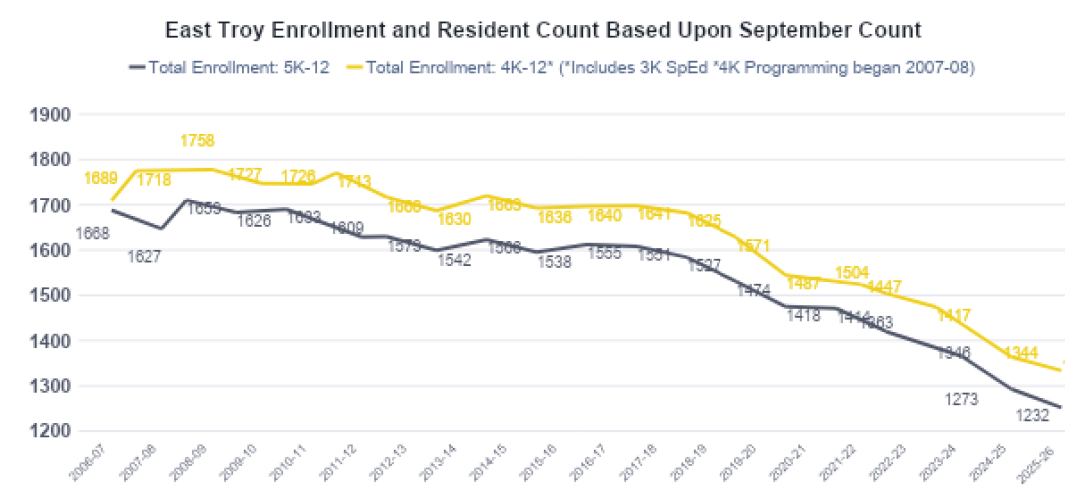
Since the 2023-24 school year, East Troy’s enrollment has decreased by 104 students. This shift is distributed across all grade levels (4K–12) and reflects a broader statewide trend, as illustrated in the accompanying K-12 Public School Enrollment graph.
Source: Milwaukee Mainstay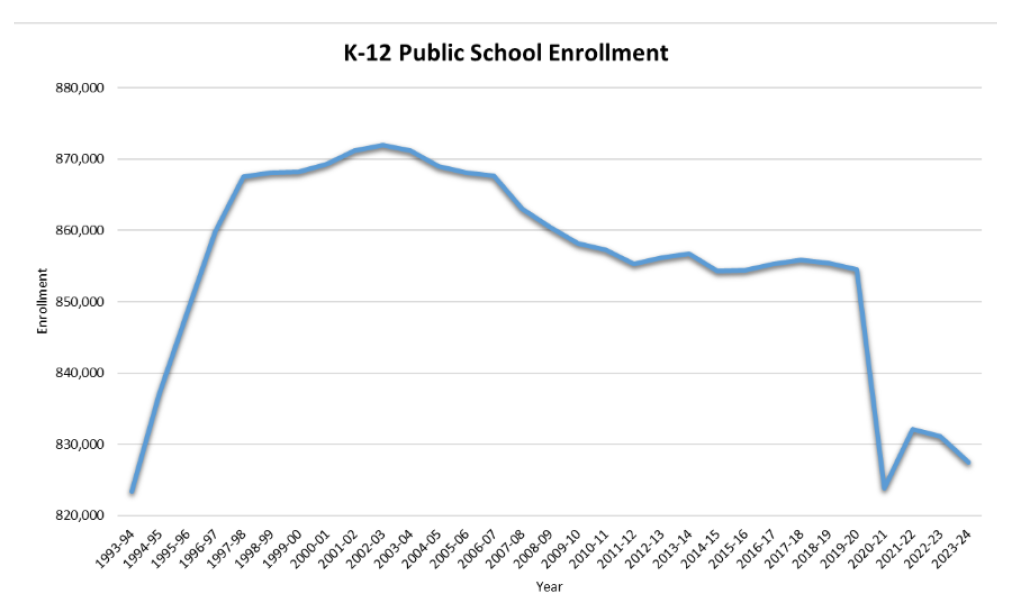
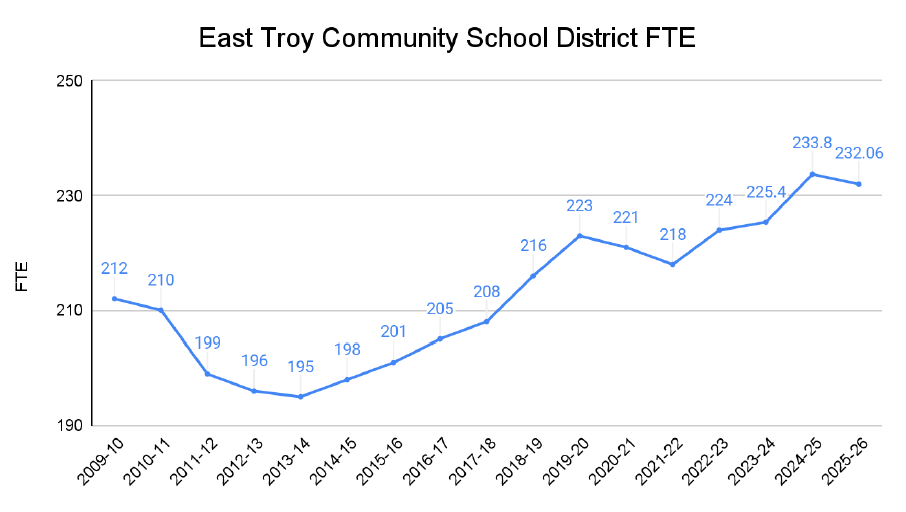
The East Troy Community School District's total staffing has increased by approximately 7 Full-Time Equivalents (FTEs) since the 2023-24 school year, as indicated in the FTE graph. This growth brings our team total to about 232 FTEs. It is important to note that this doesn't necessarily mean seven new 'hires,' but also involves a strategic reallocation of hours and roles to better meet student needs.
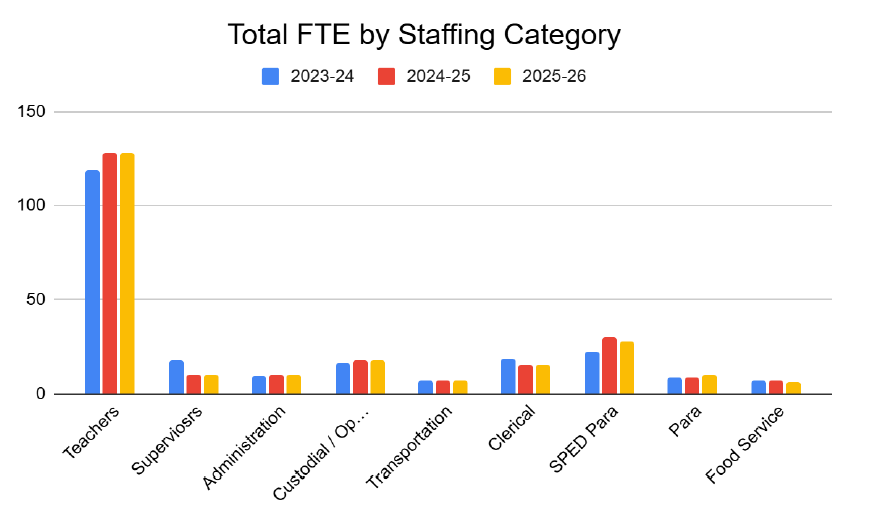
Finally, please remember that if the $4 million per year for three years operational referendum question were to be approved, the district would still need to engage in budget balancing efforts of an estimated $1.8 million over three years based on current projections. Thus, the district would continue to work diligently on health renewal rates, and attrition and resignations of personnel would be considered for no replacement while assessing the impact on student learning, staffing, and overall district operations.
-
School funding includes revenue for most resident students, including open-enroll out students; there are also separate line items in the revenue limit for private school vouchers. Due to the revenues for private school vouchers and open-enroll out students, which have corresponding expense items in the budget, it is more accurate to use membership versus “enrollment” or “per pupil costs” when evaluating the finances because membership includes a larger number of resident students. Likewise, the budget also includes grants and gifts which can often be one-time occurrence or for a very specific purpose; hence skewing per pupil calculations. Regardless of the varying factors, statistics for cost per member are available.
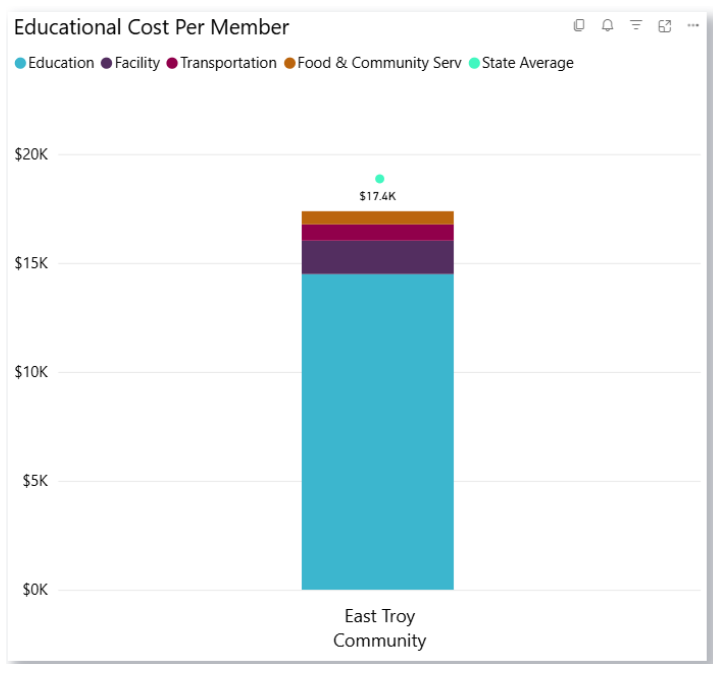
For 2025-26, Fund 10 budgeted expenditures total $26,322,896. The three-year average membership is 1541. Therefore, costs per member calculate to $17,082 per member. If community service and food service are included, the cost per member is $18,735.
However, community service and food service costs can vary greatly by district. Many other factors such as square miles for transportation, number of buildings, and specific demographics or student needs can make comparisons between districts difficult. Nonetheless, there is statewide data for all educational costs available for the 2023-24 school year. Even with the $3M/year operational referendum, ETCSD’s costs were more than a million dollars below the state average.

-
Through careful budgeting, the district generally ends the year with a surplus of 2-3% of total budgeted expenditures. It is important to end the year with a surplus, otherwise the district would have deficits each year and this wouldn’t be considered staying “within the budget” and would lead to a depletion of the fund balance. The projected deficit of $461,237 for 2025-26 was part of a three-year plan with the passing of the 2023 operational referendum. It was planned to have a surplus in 2023-24, which would then offset a deficit in 2025-26. The surpluses for 2019 to 2021 were largely due to the COVID pandemic as there was much uncertainty around revenues and expenses. There was a larger surplus for the 2022-23 school year due to 75 staff departures that year after failed referendums. HRA (Health Retirement account) forfeitures, periods of not being fully staffed and delayed maintenance projects were largely part of the 2022-23 surplus. Since additional funding support through the $3M/year operational referendum, staffing has stabilized and specific high-prioritized maintenance projects
have been completed through daily operations budgeting. It is important to understand that proper staffing supports ETCD’s mission of being a great place to learn and a great place to work. The chart below shows the district’s surplus or deficit amounts for 2019 through 2026. Budgeted numbers are listed for 2025-26 since the year is not complete.
Surplus dollars are added to the fund balance. The district has planned and worked diligently throughout many years to increase the fund balance. An adequate fund balance is important for the following reasons:
- Reduces or eliminates the need to short-term borrow thus saving the district interest expenses.
- The fund balance earns the district interest revenue ($439.693 in 2024-25).
- Contributes to a favorable Aa2 credit rating (borrowing costs would be higher if the rating were lower).
- Provides the district with funds for emergency expenses.
- Provides security with the uncertainty surrounding state and federal funding, inflation, rising costs due to world conflicts, tariffs, etc.
- Dependence on the fund balance for operating expenses will deplete the funds very quickly.
ETCSD has gradually added to the fund balance each year which has eliminated short-term borrowing for the past three years. Financial auditors who work with school districts throughout the state advise districts that a 35 - 40% fund balance is needed to eliminate short-term borrowing.
-
ETCSD recognizes the importance of open enrollment trends and the impact that “open enrollment out” students have on our budget. The district has always attempted to collect information from open enrollment families (ins and outs), but we are now attempting a comprehensive study of open enrollment.
Although we have conducted surveys in the past, we reassessed the information needed and are working to get a higher volume of returned surveys from families. The goal is to use data-backed evidence to make sure any initiatives would help yield positive results.
Unfortunately, change can take time, and the number of open enrollment students cannot be quickly reversed. This is another reason why adequate funding is so important, as families prefer quality programming opportunities, student achievements, adequate staffing, and predictable stability within a district.
-
Myth: School districts raised property taxes because they chose to spend more than inflation.
Fact: School districts can only raise revenue within the state-imposed revenue limits. To spend more than those limits requires voter approval via an operating referendum. The state authorized a per-pupil revenue limit increase that was less than inflation, but did not provide the state aid necessary to fund it—thereby shifting costs to property taxpayers.
Myth: Schools received “record funding” in the state budget.
Fact: While the budget included increases, those increases did not keep pace with inflation or rising fixed costs. Key components, like special education aid, remain underfunded.
Myth: An operational referendum is a sign of poor local fiscal management.
Fact: An operational referendum is often the only remaining tool school districts have to address structural gaps created when state funding does not keep pace with mandated costs and authorized spending authority. When schools are only allowed spending increases that fall below the amount necessary to keep pace with inflation, they must either cut programs and services for students or seek referendum approval. Often, they resort to both.
Myth: Property tax increases would have happened regardless of state action.
Fact: Historically, when the state matched revenue limit increases with increased general school aid, property tax impacts were significantly reduced. On a statewide basis, property tax increases were held in check. The 2025-2027 biennial state budget broke from that precedent.
Myth: This is a local problem.
Fact: This is a statewide policy decision with statewide consequences. Districts across Wisconsin—whether urban, suburban, and rural—are experiencing the same pressures because the revenue limits apply uniformly and the school aid formula applies to all school districts.
-
For the Wisconsin Spring Election on Tuesday, April 7, 2026, it’s important to know key voter registration and absentee ballot deadlines so you can cast your ballot successfully:
- Register by Mail or Online: Your voter registration form and proof of residence must be postmarked by March 18, 2026 for mail-in registrations. Online registration is also available through March 18, 2026 if you can verify your information with the Wisconsin DMV.
- Register In-Person at Your Clerk’s Office: You may register in-person during normal business hours until 5:00 p.m. on April 3, 2026 at your municipal clerk’s office.
- Same-Day Registration at the Polls: You can register to vote at your polling place on Election Day, April 7, 2026, from 7:00 a.m. to 8:00 p.m. — just bring proof of residence.
- Absentee Ballot Deadlines
- Ballots Sent to Voters with Requests on File: Municipal clerks may send absentee ballots to voters who already have an active request on file up through March 17, 2026.
- Request an Absentee Ballot: Regular & Temporary Overseas Voter requests must be received by 5:00 p.m. on April 2, 2026. Indefinitely Confined & Military Voter requests must be received by 5:00 p.m. on April 3, 2026.
- In-Person Absentee Voting (Early Voting): In-person absentee voting may begin as early as March 24 and run through April 5, 2026, depending on your local clerk’s schedule. Contact your municipal clerk for exact hours and locations.
- Return Your Absentee Ballot: If you have already received an absentee ballot, it must be received by your municipal clerk no later than 8:00 p.m. on Election Day (April 7, 2026).